


How many times have you stepped into a meeting and encountered “the elephant in the room”: that glaring issue everyone avoids discussing?
In team dynamics, the elephant often represents unspoken problems that hinder progress and erode trust. For both leaders and team members, addressing these issues is crucial. Yet, tackling this metaphorical mountain can be daunting.
As a team coach, I’ve learned that the elephant doesn’t simply vanish on its own. It requires a strategic approach to create a safe space where the team can confront these challenges head on. Though, much like the first step in recovery, admitting there’s a problem is essential. Without this acknowledgment, no amount of coaching can help the team move forward.
Understanding the Parts of the Elephant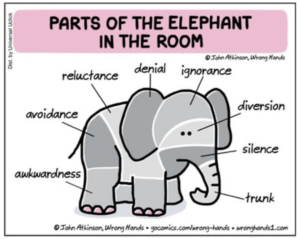

John Atkinson created an epic cartoon capturing the parts of this metaphorical elephant.
In coaching sessions, it’s essential to recognize that team members often experience various ‘parts’ of the elephant, from silence to hidden tensions. When individuals feel safe voicing their concerns or disagreements, they open the door to deeper conversations, leading to innovative solutions and stronger team bonds.
Strategies for Coaches to Address the Elephant
- Seek to Understand.
“Don’t look out only for your own interests, but take an interest in others, too. You must have the same attitude that Christ Jesus had.” (Philippians 2:4-5)
Data tells a story, but this information is helpful only if the team is both willing to participate in available assessments and share their opinions honestly. By conducting assessments and engaging in one-to-one conversations, coaches gain insights into the team’s experiences. Both quantitative and qualitative data can help coaches identify underlying issues.
- Empower and Encourage.
“Therefore encourage one another and build each other up, just as in fact you are doing.” (1 Thessalonians 5:11)
Effective coaches recognize hidden tensions and encourage dialogue that might otherwise remain unspoken. Using active listening and empathetic inquiry, a skilled coach creates a structured environment where team members can explore their fears and hesitations. This transforms difficulty into opportunity, turning vulnerability into a gateway for growth. By modeling a culture of openness, coaches enhance collaboration and foster psychological safety.
- Implement Anonymous Feedback.
“The ear that listens to life-giving reproof will dwell among the wise. Whoever ignores instruction despises himself, but he who listens to reproof gains intelligence. The fear of the Lord is instruction in wisdom, and humility comes before honor.” (Proverbs 15:31-33)
To nurture an environment where open dialogue is the norm, consider using anonymous feedback mechanisms. This allows team members to express their thoughts without fear. Questions such as the following can prompt crucial insights during coaching sessions:
- What isn’t getting spoken?
- What do you wish the team would discuss but isn’t?
- What have you been holding back?
- If you had the courage, what would you say to your team or team members?
- Set the Table.
“You prepare a table before me in the presence of my enemies.” (Psalm 23:5)
Before diving into team assessment outcomes, take time to establish a comfortable atmosphere. Regardless of whether a coach has a solid relationship with the leader and team or not, there will still be information that is shared which may not be pleasant. Rushing to deliver findings can exacerbate tensions. By revisiting ‘how we operate as a team’ agreements, the team can reflect on their conflict-handling strategies and decide if new agreements are needed before moving on.
- Support the Outcomes.
“As iron sharpens iron, so one person sharpens another” (Proverbs 27:17)
Change doesn’t happen overnight. Once the elephant has been addressed, it’s vital to maintain momentum for positive change. The team must collaboratively develop an action plan that addresses the raised concerns, assigning ownership of specific tasks. This fosters accountability and strengthens trust among team members. Schedule regular check-ins to discuss progress and lingering challenges.
- Celebrate Successes.
“Let us come into his presence with thanksgiving; let us make a joyful noise to him with songs of praise!” (Psalm 95:2)
Acknowledge and celebrate small victories as the team works through their challenges. Recognizing individual contributions and teamwork cultivates a sense of belonging and encourages ongoing collaboration. Learning from these discussions transforms apprehension into growth opportunities, which positions the team to move from colleagues to partners.
Navigating the Elephant
Navigating elephant conversations requires a coach willing to engage with discomfort. By confronting the “elephant in the room”, teams can develop resilience and tackle obstacles head-on while strengthening their cohesion through mutual respect and understanding. When teams trust and view their coach as a true partner and ally, even challenging discussions can become opportunities for collective problem-solving.
Creating space for these conversations is a process that shouldn’t be rushed. With the right support, teams can learn to tackle their elephants together, turning what could be conflicts into catalysts for growth.
What elephant in the room are you currently experiencing? What is your next step to address the elephant?
Leave me a comment below!



0 Comments